How to Make the Perfect Roasted Vegetable Hummus Bowl (Step-by-Step Guide) 2025
Eating healthy doesn’t have to be boring or complicated. In fact, some of the best meals are the simplest—where fresh ingredients, balanced flavors, and colorful presentations come together in a single bowl. One recipe that embodies this idea perfectly is the Roasted Vegetable Hummus Bowl.
This hearty dish combines smoky roasted vegetables, creamy hummus, optional grains, and fresh toppings for a meal that’s both satisfying and versatile. Whether you’re looking for a quick weeknight dinner, a meal-prep-friendly lunch, or a customizable dish for family and friends, this recipe checks all the boxes.
In this complete guide, we’ll explore everything you need to know: the ingredients, step-by-step preparation, variations, serving suggestions, storage, and even answers to the most frequently asked questions. By the end, you’ll be ready to create your own hummus bowls like a pro.
Why Choose a Roasted Vegetable Hummus Bowl?
Healthy eating is often misunderstood as restrictive or bland, but the roasted vegetable hummus bowl proves otherwise. Here’s why it deserves a place in your regular meal rotation:
1. Packed with Nutrients
- Roasted vegetables like broccoli, bell peppers, zucchini, and tomatoes provide vitamins A, C, and K, along with antioxidants and fiber.
- Hummus, made from chickpeas and tahini, delivers plant-based protein and heart-healthy fats.
- Add whole grains like quinoa or brown rice for sustained energy and extra fiber.
2. Balanced and Satisfying
This bowl isn’t just a salad—it’s a complete meal. The creamy hummus pairs with smoky vegetables, crunchy toppings, and optional grains to create a balance of flavors and textures that leave you full and energized.
3. Meal-Prep Friendly
If you struggle with weekday lunches or quick dinners, this bowl is the perfect solution. Roast a batch of vegetables at the start of the week, and you can assemble bowls in minutes whenever hunger strikes.
4. Customizable for Every Diet
- Vegan? Skip the cheese or use a plant-based alternative.
- Gluten-free? Stick with naturally gluten-free grains or omit them.
- High-protein? Add roasted chickpeas, tofu, or grilled chicken.
5. Delicious Hot or Cold
Enjoy it warm, fresh out of the oven, or chilled as a refreshing meal the next day.
Ingredients: What You’ll Need
The beauty of this recipe lies in its flexibility. Still, there are some core ingredients that make the flavors shine.
For the Roasted Vegetables
- Broccoli florets – Adds crunch, fiber, and a dose of vitamin C.
- Red bell pepper – Sweet, colorful, and full of antioxidants.
- Zucchini – Roasts quickly and adds mild flavor.
- Cherry tomatoes – Burst with sweetness when roasted.
- Red onion – Softens in the oven and adds depth.
For Seasoning
- Olive oil – Helps with caramelization and adds richness.
- Smoked paprika – Gives a smoky depth.
- Garlic powder – Enhances flavor without overpowering.
- Ground cumin – Adds warmth and earthiness.
- Salt and pepper – To balance flavors.
For the Base
- Hummus – Use homemade or store-bought. Creamy, nutty, and satisfying.
- Optional grains – Quinoa, brown rice, couscous, or farro for extra substance.
For Toppings
- Feta cheese (optional) – A salty, tangy kick.
- Toasted nuts or seeds – Pine nuts, sunflower seeds, or almonds for crunch.
- Fresh herbs – Parsley, cilantro, or mint for brightness.
- Lemon wedges – A squeeze of juice ties everything together.
Step-by-Step Instructions
Step 1: Roast the Vegetables
- Preheat your oven to 400°F (200°C).
- Line a baking sheet with parchment paper for easy cleanup.
- Spread broccoli, diced red bell pepper, zucchini slices, cherry tomatoes, and onion evenly.
- Drizzle with olive oil, then sprinkle with paprika, garlic powder, cumin, salt, and pepper.
- Toss well to coat.
- Roast for 20–25 minutes, stirring halfway, until veggies are tender and golden.
Step 2: Prepare the Base
- If using grains, cook them according to package instructions.
- Divide between bowls to form a base.
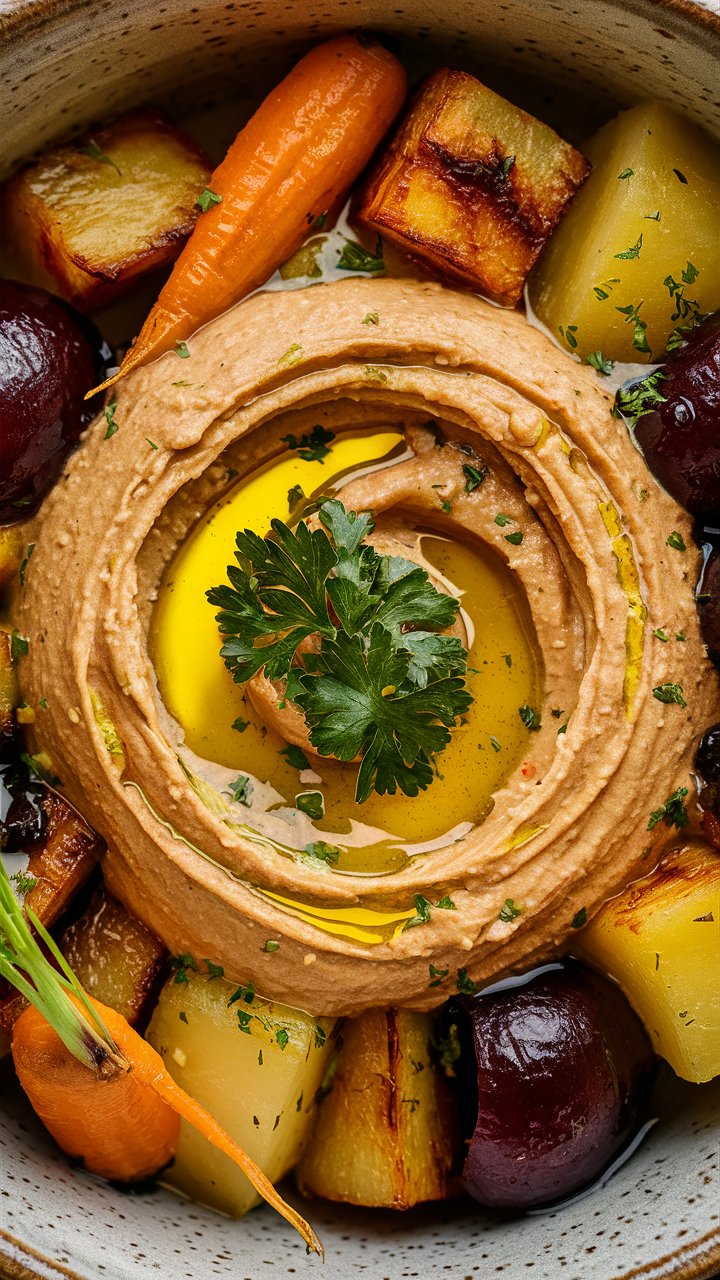
- Add a generous scoop of hummus, spreading it slightly to one side.
Step 3: Assemble the Bowls
- Top each bowl with roasted vegetables.
- Sprinkle with crumbled feta (if using).
- Add toasted nuts or seeds for crunch.
- Garnish with fresh herbs.
- Finish with a drizzle of olive oil and serve with lemon wedges.
Flavor Variations
One of the best things about this recipe is how easily it adapts. Here are some creative twists:
Different Vegetables
- Mushrooms for umami depth.
- Carrots or sweet potatoes for natural sweetness.
- Eggplant for a Mediterranean feel.
Protein Boosts
- Roasted chickpeas for crunch.
- Grilled tofu for a vegan-friendly option.
- Shredded rotisserie chicken or grilled salmon for non-veg additions.
Flavor Enhancers
- Harissa or chili flakes for heat.
- Tahini drizzle for creaminess.
- Balsamic glaze for tangy-sweet contrast.
Greens
- Add a handful of spinach, kale, or arugula under the vegetables for extra nutrients.
What to Serve With It
This bowl is filling on its own, but you can pair it with:
- Warm pita bread or naan for scooping.
- Lentil soup or tomato soup for a cozy meal.
- Pickled vegetables for tangy contrast.
Storage and Meal Prep
- Store leftover roasted vegetables, hummus, and grains separately in airtight containers.
- Refrigerate for up to 4 days.
- Reheat veggies in the oven or skillet for best texture.
- Keep hummus cold or bring to room temperature before serving.
- Freezing is not recommended.
Nutritional Insights
A typical roasted vegetable hummus bowl (with grains, hummus, and toppings) provides:
- Calories: ~450–550 per serving
- Protein: 15–20g (higher with added chickpeas or chicken)
- Fiber: 10–12g
- Healthy fats: From olive oil, hummus, and seeds
- Micronutrients: High in vitamin C, vitamin A, potassium, and magnesium
This balance makes it a perfect macro-friendly meal for most lifestyles.
Frequently Asked Questions (FAQs)
1. Can I use store-bought hummus?
Absolutely. Choose a high-quality hummus you enjoy, such as classic, roasted garlic, or red pepper.
2. Do I need to add grains?
Not at all. The bowl is hearty enough with just hummus and vegetables.
3. Can I make this vegan?
Yes—just skip the feta cheese or use a dairy-free substitute.
4. What can I use instead of cumin and paprika?
Try za’atar, curry powder, or Italian herbs depending on your taste.
5. Can I serve it cold?
Yes, it works wonderfully as a chilled meal for lunchboxes or summer dining.
6. What’s a good nut-free topping?
Roasted sunflower seeds or pumpkin seeds (pepitas) work perfectly.
Expert Tips for Perfect Bowls
- Cut vegetables evenly so they roast at the same rate.
- Don’t overcrowd the pan—use two sheets if needed for caramelization.
- Be generous with spices—vegetables absorb bold flavors beautifully.
- Use warm vegetables over hummus to slightly melt and blend textures.
- Double the batch—leftovers make incredible lunches.
Final Thoughts
The Roasted Vegetable Hummus Bowl is more than just a recipe—it’s a framework for healthy, customizable, and satisfying meals. From its vibrant colors to its nutrient-dense ingredients, this dish proves that wholesome eating can also be deeply enjoyable.
Whether you prepare it as a quick dinner, a meal-prep staple, or a shareable spread for friends and family, it’s guaranteed to impress. Pair it with warm bread, drizzle it with your favorite sauce, and make it your own.
Healthy food doesn’t have to be complicated. Sometimes, all it takes is a tray of roasted vegetables, a spoonful of hummus, and a little creativity.