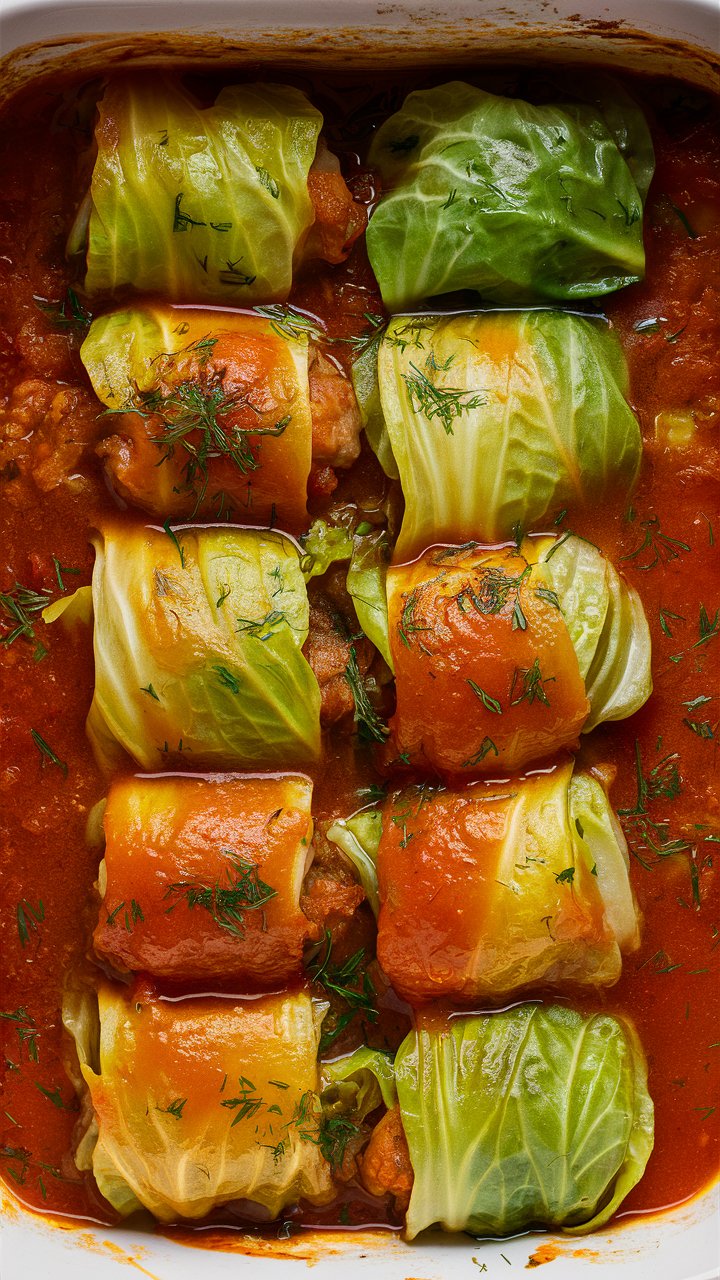
How to Make Perfect Stuffed Cabbage Rolls From Scratch 2025
Stuffed cabbage rolls (also known as golubtsi, golabki, holishkes, sarma, or simply “cabbage rolls”) are one of the world’s most beloved comfort dishes. They combine humble ingredients—cabbage, ground meat, rice, sauce—into an elegant parcel that delivers flavor, texture, and nostalgia in every bite.
What makes them enduring?
- Balance of textures: tender cabbage leaf wrapping + juicy filling + sauce
- Versatility: change meats, seasonings, or sauce styles
- Make-ahead ease: many parts can be prepared in advance or frozen
- Cultural resonance: found across Eastern Europe, the Middle East, and beyond
In this article, you’ll get a complete, foolproof method to make stuffed cabbage rolls, along with pro tips, variations, and everything to avoid the usual pitfalls.
2. A Brief History & Variations
Origins & Names
Stuffed cabbage rolls appear across numerous cuisines. In Central and Eastern Europe, the dish is known as Gołąbki in Poland, голубцы / holubtsi in Ukraine, golabki or golumpki in various diasporas. Vikalinka+3Wikipedia+3Wikipedia+3 In Jewish Eastern European culinary tradition, the dish is called Holishkes, especially when cooked in a sweet-sour tomato sauce. Tori Avey+1
In the Middle East, the concept of “stuffed leaves” (known broadly as dolma or sarma) includes grape leaves, cabbage leaves, or other greens stuffed with grains, meat, or vegetables. Wikipedia+1
Regional Variations & Flavors
- Polish / Central Europe: Tomato sauce, sometimes with a touch of sugar, paprika.
- Russian / Ukrainian (Golubtsi): Often uses a creamy tomato sauce or sour cream in the braising liquid. Vikalinka+1
- Jewish (Holishkes): Sweet-sour tomato sauce with possible additions like raisins, brown sugar or lemon juice. Tori Avey
- Scandinavian / Swedish variant: Cabbage rolls may be served with lingonberry jam for a sweet-tart contrast. Wikipedia
- Middle Eastern / Armenian / Turkish: Stuffed leaves more generally (including cabbage), often with different spice profiles, sometimes vegetarian. Wikipedia+1
Because this dish transcends cultures, feel free to adapt seasonings, meats, grains, or sauces to your palate.
3. Ingredient Guide: What You’ll Need
Below is a robust ingredients list. Later, we’ll break down substitutions, optional items, and scaling tips.
Ingredients (for ~8–10 servings)
For the Cabbage Rolls
- 2 medium to large heads of green cabbage (or a mix of green + savoy)
- 1 cup (around 200 g) uncooked white long-grain rice
- 500 g (1.1 lb) ground pork
- 500 g (1.1 lb) ground turkey (or beef, lamb, or mix)
- 2 eggs
- 2–3 carrots, grated
- 1 large onion, finely diced
- 3–4 cloves garlic, minced
- Fresh parsley, chopped (about ½ cup)
- 1 tsp paprika (sweet or smoked)
- Salt & black pepper (to taste)
- Olive oil or neutral cooking oil
- Butter (optional, for flavor)
For the Sauce / Braising Liquid
You can adopt one of several styles (tomato, sour cream, sweet-sour, etc.). Here’s a flexible “podliva / tomato-cream” style:
- 2 cups tomato sauce or crushed tomatoes
- 1 cup canned diced tomatoes (optional)
- ½ cup sour cream or plain yogurt
- 1–2 Tbsp tomato paste
- 1 Tbsp sugar or honey (optional, to balance acidity)
- ½ cup reserved cabbage boiling water or stock
- Additional herbs/spice: bay leaf, dried oregano, marjoram, thyme
Substitutions & Notes
- Rice alternatives: brown rice, quinoa, bulgur, or for low-carb version, cauliflower rice (though texture will differ). Evolving Table+1
- Meats: any lean ground meat works (beef, lamb, chicken). Adjust seasonings accordingly.
- Vegetarian / vegan version: Replace meat with a mixture of cooked lentils, mushrooms, chopped vegetables, or beans. Use plant-based “cream” or omit dairy in sauce.
- Sauce styles: tomato only, cream-tomato, or sweet-sour (with lemon, sugar, or even raisins) are all acceptable variations.
- Herbs & spices: dill, mint, thyme, smoked paprika, or even a pinch of cumin can add depth.
4. Preparing the Cabbage Leaves (Tips & Tricks)
One of the trickiest parts is getting soft, intact cabbage leaves. Here’s how to do it well.
Method A: Parboiling the Whole Head
- Core the cabbage: Use a sharp knife to slice out a thick core at the base (a “V” or round cut).
- Boil: Bring a large pot of salted water (add a bit of vinegar if desired) to a gentle boil.
- Immerse the cabbage head: Place the entire cabbage head into the boiling water. Cover with a lid.
- Loosen the layers: After ~2 minutes, you’ll see outer leaves loosening. Use tongs to gently peel off leaves as they loosen.
- Continue boiling: Return the core to the pot; repeat until you have enough leaves (e.g. 10–15 leaves).
- Drain & cool: Place leaves on a towel to drain and cool slightly, so you can handle them.
This method is recommended because it softens leaves uniformly and you can peel intact leaves without tearing. Allrecipes+2Evolving Table+2
Method B: Blanching in Batches
If your pot is small, you can cut the cabbage in halves or quarters, then blanch leaves in batches. This requires more handling and risk of tearing, but can be done.
Pro Tips
- Remove the thick ribs or stems on the leaf underside (or thin them) so they roll more easily.
- Don’t overcook leaves—they should become pliable but not mushy.
- Reserve some of the cabbage boiling water; it’s flavorful and useful later in the sauce or braising liquid.
- Some cooks freeze the cabbage head for a few days before using; when thawed, the leaves separate more easily. Vikalinka
5. The Filling: Meat, Rice & Vegetables
An ideal filling balances protein, grain, vegetables, and flavor. Here’s how to build it:
Step 1: Cook the Rice
- Rinse 1 cup uncooked long-grain rice under cold water until water runs clear.
- Cook in about 1¾ to 2 cups water (or according to your rice package) until just done. You want it slightly undercooked (so it doesn’t turn mushy inside the roll).
- Let rice cool before mixing with meat.
Step 2: Sauté Vegetables
- Heat 2–3 Tbsp olive oil + optional butter in a pan.
- Sauté diced onion until translucent.
- Add grated carrots, cook until softened.
- Add minced garlic, sauté 30 seconds till fragrant (don’t burn).
- Optional: a splash of tomato paste to deepen flavor.
Step 3: Combine Filling
In a large bowl (or stand mixer on low), combine:
- Ground meat(s)
- Partially cooked rice
- Sautéed onion, carrot, garlic
- Salt, pepper, paprika, chopped parsley
- 2 eggs to bind
Mix gently but thoroughly—don’t overwork (that can make rolls dense). You may sample a tiny bit (pan-fry a small portion) and adjust salt or seasoning before rolling.
Note on Meat Mixture Testing
Chef Kristen Kish recommends shaping a small patty of the mixture and cooking it quickly to test seasoning before rolling everything. Food52
6. Rolling Techniques: How to Roll Neatly
Rolling neatly ensures the filling stays inside, and the rolls cook uniformly. Here’s a step-by-step:
- Lay one cabbage leaf on your work surface (stem end toward you).
- Trim the thick base if necessary (V-notch or cut out a wedge).
- Place ~2 Tbsp (or a small handful) of filling near the stem side, slightly off-center.
- Fold the two side “wings” of the leaf inward over the filling.
- Roll up from the stem end toward the top, creating a tight cylinder.
- Place seam side down in the cooking vessel (so it stays closed during cooking).
For smaller leaves, you can roll like a burrito and tuck both ends.
Line the bottom of your pot or baking dish with a few leftover cabbage leaves (to protect rolls from direct heat and prevent sticking).
7. Sauce / Cooking Liquid Options
What kind of sauce or braising liquid you use can define the flavor. Here are a few popular styles:
Tomato-Cream (Podliva Style)
- Base: tomato sauce + crushed tomatoes
- Creaminess: sour cream or plain yogurt
- Thickener: tomato paste
- Liquid: reserved cabbage water or broth
- Seasoning: a bit of sugar, herbs (oregano, thyme), bay leaf
This leads to a rich, slightly creamy, tomato-forward sauce that clings to the rolls.
Pure Tomato / Sweet-Sour
- Base: tomato sauce, crushed tomatoes
- Sweet-sour touch: sugar, honey, lemon juice, or even raisins
- Liquid: stock or water
- Seasoning: paprika, bay leaf, possibly vinegar
This style is closer to Jewish holishkes or some Eastern European versions.
Brothy Style
For a lighter version, you can simply simmer cabbage rolls in a seasoned broth (with tomatoes or without) — good if you prefer a less rich dish.
8. Cooking Methods: Oven, Stovetop, Slow Cooker
Method A: Oven (Recommended for Even Cooking)
- Preheat oven to ~180 °C (350 °F).
- Spread a thin layer of sauce or cooking liquid over the bottom of a baking dish or Dutch oven.
- Arrange rolls seam-side-down, snugly.
- Pour remaining sauce (or sauce + liquid) over, ensuring the rolls are mostly submerged (about ¾ covered).
- Cover tightly with foil or lid.
- Bake for 1 hour to 1 hour 15 minutes (check at 60 min).
- Optional: uncover last 10 min to lightly brown tops.
Method B: Stovetop
- Use a deep pot with a snug lid.
- Layer bottom with cabbage leaves, then add rolls.
- Pour sauce + liquid over.
- Bring to a gentle boil, reduce heat to low, cover and simmer ~45 minutes to 1 hour.
- Rotate or baste rolls occasionally to ensure even cooking.
Method C: Slow Cooker / Crockpot
- Place a few leaves at the bottom, arrange rolls on top.
- Pour sauce + liquid mixture.
- Cook on low for 6–8 hours or high for ~3–4 hours.
- If sauce is too thin, you can thicken later by removing lid and simmering.
Temperature & Doneness Check
- Internal meat temperature should reach ~74 °C (165 °F) for poultry, or ~70 °C (160 °F) for beef/pork mixtures.
- The cabbage rolls should feel tender when pierced with a fork.
9. Serving Suggestions & Side Dishes
Stuffed cabbage rolls are hearty; pair them with complimentary sides:
- Mashed potatoes (classic and comforting)
- Crusty bread to soak up extra sauce
- Roasted or steamed vegetables (beets, carrots, green beans)
- Pickles or sauerkraut for a tangy contrast
- A dollop of sour cream or plain yogurt on top
- Fresh herbs (parsley, dill) as garnish
If the sauce is tangy or creamy, a mild side like potatoes or rice works best.
10. Storage, Freezing & Reheating
Refrigeration
Let the rolls cool to room temperature. Transfer to an airtight container; refrigerate up to 3–5 days.
Freezing
You have two options:
- Freeze raw (uncooked) rolls: Assemble and roll the cabbage rolls, place them in a freezer-safe container or bag (in a single layer or separated by parchment). Freeze up to 3 months.
- Freeze cooked rolls: After fully cooking, allow to cool, then freeze in sauce inside airtight containers.
Thawing & Reheating
- Thaw in the fridge overnight (if frozen raw or cooked).
- Reheat in oven: ~160–170 °C (325–340 °F) covered, until heated through (25–40 min).
- Reheat stovetop: Gently simmer in sauce, covered.
- Microwave: Cover with a microwave-safe lid and heat in intervals, stirring sauce occasionally.
Note: Freezing can slightly alter texture (especially of cabbage), but flavor generally remains intact.
11. Troubleshooting Common Issues
| Problem | Cause | Solution |
|---|---|---|
| Cabbage leaves tear easily | Overcooked leaves or thick ribs not trimmed | Cook leaves just until pliable; trim or thin stems |
| Filling falls out | Loose rolling or insufficient binding | Roll tightly, use eggs, don’t overfill |
| Dry rolls | Insufficient sauce or liquid | Increase sauce coverage, add cooking liquid |
| Sauce too thin | High liquid ratio | Reduce uncovered in oven or simmer uncovered |
| Bland filling | Underseasoned meat/rice mix | Test a small patty before rolling, adjust salt & herbs |
| Overcooked/mushy | Rolled too loosely or cooked too long | Roll firmly, check doneness earlier |
Also, as one tip from Allrecipes’ “Secrets to Perfect Rolls”, do not roll too tightly, because rice will swell during cooking, risking the cabbage shell breaking. Allrecipes
12. Variations & Customization Ideas
Here are ways to adapt this base recipe to your taste, dietary needs, or ingredient availability.
Meatless / Vegetarian / Vegan
- Use cooked lentils + mushrooms + sautéed vegetables as substitute for meat
- Use vegetable broth in sauce
- Replace sour cream with coconut cream, cashew cream, or vegan yogurt
Grain Variations
- Use brown rice, quinoa, bulgur instead of white rice
- Use half rice + half barley, or mix in oats
Sauce Tweaks
- Spicy: add chili flakes, harissa, cayenne
- Herby: add lots of dill, mint, thyme
- Sweet-sour Jewish style: include brown sugar or raisins, lemon juice, or even a bit of apple sauce
- Creamy white sauce fusion: some versions mix in sour cream + a light béchamel
Meat Combinations
- Use ground lamb, veal, or mix of meats
- Add bacon bits, pancetta for smoky depth
- Use lean meats for lighter version
Cabbage Alternatives
- Use savoy cabbage (milder, softer) Vikalinka
- Use fermented cabbage leaves (like sauerkraut leaves) for tang
- Use Swiss chard, collard greens, or grape leaves (for smaller rolls)
Regional Inspired Twists
- Middle Eastern: spice it with cumin, allspice, mint; serve with yogurt sauce
- Eastern European: more sour cream, dill, or paprika
- Scandinavian: serve with lingonberry or berry jam
- Asian fusion: add ginger, soy sauce, garlic, sesame oil
13. Nutrition, Diet Tips & Health Notes
- Protein & fiber balance: The meat + rice + vegetables provide a good mix of macro- and micronutrients.
- Lower-fat version: Use lean meats (turkey, chicken) and reduce oil/butter.
- Low-carb option: Use cauliflower rice or skip rice; rely more on vegetables and extra herbs.
- Sodium watch: Be mindful with canned tomato sauces and salts; adjust to taste.
- Allergen notes: Eggs, dairy (sour cream) can be replaced or omitted for vegan versions.
- Vegetarian / plant-based: Ensure enough protein by using legumes, tofu, or textured vegetable protein (TVP) in the filling.
14. Final Thoughts & Encouragement
Stuffed cabbage rolls may look intricate, but once you break down the steps, they become manageable and rewarding. The layering of flavors—the tender cabbage, juicy filling, and savory sauce—makes each bite a journey.
Don’t be discouraged if your first batch isn’t perfect. With practice, you’ll develop:
- A feel for when cabbage is pliable
- The right roll tightness
- A sense for seasoning levels
Make extra sauce; leftover sauce is great on pasta or vegetables. Let flavors rest—these often taste even better the next day.
15. Frequently Asked Questions (FAQ)
Q: Can I skip pre-cooking the rice?
A: You could use uncooked rice, but the result is more unpredictable—some grains may remain hard. Cooking or partially cooking ensures uniform texture.
Q: Do I have to use two types of meat?
A: No. You can use a single meat (beef, pork, turkey) or even make it entirely vegetarian/vegan.
Q: Can I bake uncovered?
A: You risk drying the rolls. It’s better to keep covered, then optionally uncover near the end to brown lightly.
Q: How do I make sure rolls don’t fall apart?
A: Roll tightly, use eggs in filling, place seam-side down, and submerge in enough sauce so the rolls are held together.
Q: Can I make them a day ahead?
A: Yes. Assemble and refrigerate (covered) overnight. Just add extra liquid before cooking if sauce gets absorbed.
Q: How many rolls per head of cabbage?
A: Depends on size, but you’ll often get 10–15 usable leaves per head if you core well and remove outer damaged leaves.