How to Make Perfect French Crepes at Home 2025
Crepes — those delicate, paper-thin pancakes that whisper of Parisian cafés, warm breakfasts, and versatile feasts. Classic crepes are among the most elegant and flexible dishes in any kitchen. Whether you dress them with sugar and lemon, fill them with savory cheese and ham, or wrap them around creamy berries, they shine. This guide will walk you through every aspect: ingredients, technique, variations, troubleshooting, nutrition, serving ideas — everything you need to become a crepe master.
1. What Are Crepes?
A “crepe” (French: crêpe) is a very thin pancake, originating in Brittany, France. Unlike American pancakes, which are thick, fluffy, and cakey, crepes are flat, flexible, lightly crisp around the edges, and usually cooked very quickly.
There are two major types of crepes:
- Sweet crepes (crêpes sucrées) – made with a little sugar, served with fruits, jams, whipped cream, chocolate, etc.
- Savory crepes (galettes, when made with buckwheat) – often filled with cheese, meats, vegetables, eggs, sauces.
Classic crepes are typically made from a simple batter of flour, eggs, milk, a little water, butter, plus optional sugar and salt.
2. Why Classic Crepes Are Loved Worldwide
Here are reasons crepes hold a special place in homes, cafes, and restaurants:
- Versatility: They adapt to almost any flavor profile — from sweet desserts to hearty dinners.
- Speed: Batter can be made in minutes; each crepe cooks in under two minutes.
- Minimal ingredients: Pantry staples are enough. No fancy or obscure items required.
- Impressive presentation: They look elegant — great for entertaining.
- Make-ahead potential: Batter can rest; crepes can be stacked, stored, even frozen.
Because of these features, crepes make for a strong breakfast or brunch dish, a dessert, or even a light dinner.
3. Key Ingredients & Their Roles
To master crepes, you must understand what each component contributes.
| Ingredient | Purpose / Effect | Tips for Best Results |
|---|---|---|
| All-purpose flour | Provides structure, holds everything together. Gives body to the crepe. | Sift to avoid lumps; measure by weight (for accuracy). Can substitute with 1:1 gluten-free blends or partially with buckwheat. |
| Eggs | Bind the flour and liquids; add richness; help browning. | Use large eggs at room temperature for best mixing. Tempered ingredients prevent curdling. |
| Milk | Adds moisture, creates tenderness; milk fat helps with flavor and browning. | Warm the milk slightly (but don’t scald). Full fat gives better flavor; you can use lower fat or non-dairy. |
| Water | Lightens texture; helps batter be more flexible and less heavy. | Use lukewarm water for best mixing. Cold water can lead to lumps; too hot may cook the eggs early. |
| Butter (melted) | Adds richness, flavor, and a non-sticky surface; helps with browning. | Use unsalted so you control salt; melt and cool slightly so it doesn’t cook eggs. Brush or melt more butter in pan for frying. |
| Sugar (for sweet crepes) | Adds flavor and helps with browning. | Adjust amount depending on how sweet the fillings/toppings will be. For savory, reduce or omit. |
| Salt | Enhances flavor; balances sweetness. | A pinch is usually enough. If you’re using salted butter or salty fillings, reduce external salt. |
4. Equipment You’ll Need
While classic crepes require minimal fancy gear, some items make the process more reliable and results finer.
- Blender or mixing bowl + whisk: For smooth batter. A blender makes it very easy to avoid lumps.
- Non-stick skillet or crepe pan (10-inch / 25 cm is common) – ideally with low sides so you can flip easily.
- Thin spatula (offset or flexible) – to gently release and flip the crepe without tearing.
- Butter (or oil or non-stick spray) for greasing.
- Ladle or measuring cup – for portion consistency.
- Cooling rack or flat plate – to stack finished crepes. If stacking while hot, use parchment or paper between layers to prevent sticking.
5. Step-by-Step Recipe for Classic Crepes
Here is a detailed, easy-to-follow recipe. Adjust as needed for scaling.
Ingredients (makes about 8-10 crepes; adjust up or down)
- ½ cup (120 ml) lukewarm water
- 1 cup (240 ml) warm milk
- 4 large eggs (room temperature)
- 4 tablespoons unsalted butter, melted (plus extra for cooking)
- 1 cup (125 g) all‐purpose flour, sifted
- 2 tablespoons granulated sugar (optional / for sweet crepes)
- Pinch of sea salt
Method
A. Prepare the Batter
- Warm the liquids: Warm the milk gently (do not boil), and have the water lukewarm. Room-temperature eggs help avoid cooling down the batter too much.
- Combine: In a blender, add water, warm milk, eggs, melted butter, flour, sugar (if using), salt. Blend on low speed until batter is completely smooth. If you’re doing by hand: sift flour, mix wet ingredients in a separate bowl, gradually whisk in flour.
- Rest: Let the batter sit for 5-10 minutes. This lets small bubbles escape and allows the flour to fully hydrate, leading to smoother, more flexible crepes. If possible, you can rest it longer (up to 30 min), refrigerated, but cover so it doesn’t form a skin.
B. Cook the Crepes
- Preheat the pan: Heat your non-stick skillet over medium heat. Test by flicking a drop of water — it should sizzle and evaporate almost immediately.
- Grease pan: Melt a small pat of butter; brush or swirl it so pan is lightly coated.
- Pour batter: Use ~ ¼ cup (about 60 ml) of batter; pour into center of the pan, then lift and tilt, swirling to spread the batter thin to the edges. You want a thin layer that covers the bottom.
- First side cooking: Cook about 1 minute, until the edges begin lifting and turning light golden, and the underside is lightly brown.
- Flip carefully: Use a thin spatula to loosen edges; then flip gently. Cook second side about 30-45 seconds, until just lightly golden (it cooks faster).
C. Repeat & Stack
- Transfer cooked crepe to plate or board. As you make more, lightly butter the pan between crepes as needed.
- Once crepes are done, allow to cool slightly before stacking. To avoid sticking, place a sheet of parchment or waxed paper between crepes.
6. Flavor Variations: Sweet & Savory
Classic crepes are a canvas. Here are ideas to customize:
Sweet Variations
| Variation | Additions & Fillings | Tips |
|---|---|---|
| Simple sugar & lemon | Squeeze fresh lemon juice and sprinkle powdered sugar | Best right before eating so sugar dissolves. |
| Nutella & banana | Spread chocolate-hazelnut spread, add banana slices, fold into a triangle or roll. | Warm the crepe slightly before adding Nutella to help it melt. |
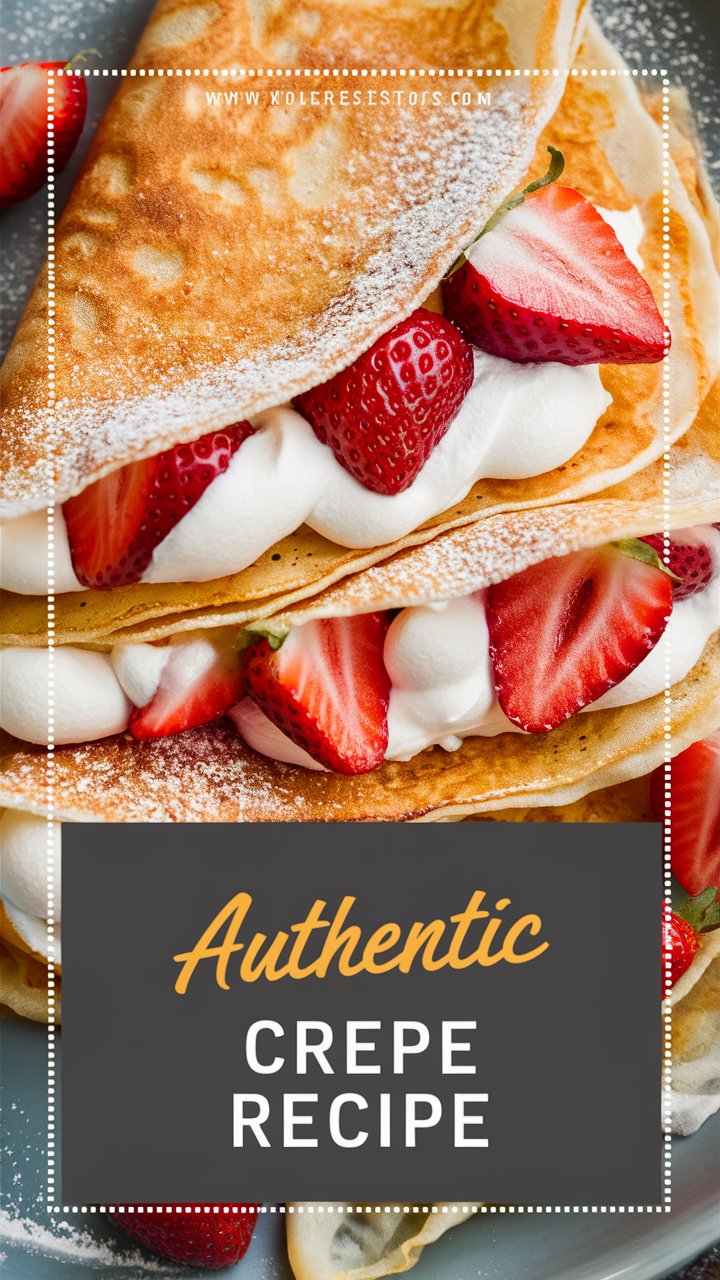
| Berries & whipped cream | Use seasonal berries (strawberries, blueberries, raspberries), whipped cream or mascarpone | Macerate berries with a bit of sugar for more intense flavor. |
| Citrus zest & vanilla | Add vanilla extract + zest of lemon or orange to the batter; serve with sweet citrus sauce | Be gentle: too much zest makes bitterness. |
Savory Variations
| Variation | Additions & Fillings | Tips |
|---|---|---|
| Ham & cheese | Use slices of cooked ham, grated cheese (Swiss, cheddar), optional mustard | Use low-moisture cheese to avoid sogginess. |
| Spinach & feta | Sauté spinach (onion, garlic optional), crumbled feta; fold in crepe | Drain spinach very well; moisture can break crepe. |
| Mushroom & Gruyère | Sauté mushrooms with herbs; melt Gruyère or similar cheese; sprinkle herbs | Cook mushrooms with butter or oil first; drain excess liquid. |
| Smoked salmon & dill cream | Spread cream cheese mixed with dill; add smoked salmon and a squeeze of lemon | Use room-temperature fillings so crepe doesn’t cool too quickly. |
7. Advanced Techniques & Variations
For those wanting to elevate:
- Make buckwheat or half-buckwheat crepes (galettes): Replace part or all of the flour with buckwheat flour. These are traditional for savory fillings in Brittany. They have a nutty flavor and more texture.
- Gluten-free versions: Use gluten-free flour blends (rice, potato, tapioca, etc.). Expect slight difference in texture; resting and letting batter sit helps.
- Dairy-free / vegan alternative: Replace milk with plant milks (oat, almond, soy), butter with vegan butter or oil, and use flaxseed or chia “egg” if avoiding eggs (though texture changes).
- Flavor enrichments: Add spices (cinnamon, cardamom), citrus zests, vanilla extract or bean, cocoa powder (for chocolate crepes).
- Color & presentation: Use food coloring or natural colorants (like beet juice, matcha) for themed desserts. Or get creative with swirl designs (drizzling batter in patterns).
8. Troubleshooting Common Problems
Even with good technique, things can go wrong. Here are common issues, causes, and fixes.
| Issue | Likely Cause | How to Fix It |
|---|---|---|
| Crepes tearing when flipping | Batter too thin; crepe stuck in pan; flipped too early | Ensure pan is well greased; let edges set and lift before flipping; adjust batter thickness if needed. |
| Crepes too thick / cakey | Used too much batter; batter too thick; not swirling pan | Use less batter; thin batter with more liquid; tilt/swirl pan immediately after pouring. |
| Beaten egg smell or taste | Milk or water too hot; eggs partially cooked in batter | Cool melted butter; warm milk not hot; avoid blending at high speed that creates heat. |
| Uneven cooking or browning | Uneven heat; pan too hot or too cold; inconsistent batter | Preheat properly; adjust heat; ensure pan surface is even; stir batter if ingredients settle. |
| Batter with lumps | Flour not sifted; mixed too fast without gradually adding wet/dry; cold or clumpy ingredients | Sift flour; mix gradually; use blender; let batter rest to let lumps disappear. |
| Crepes sticking to pan | No non-stick; insufficient butter or oil; pan surface worn; heat too high | Use non-stick skillet or well-seasoned crepe pan; grease sufficiently; maintain medium heat. |
9. Storage, Freezing & Reheating
To make classic crepes more convenient for meal prep or feeding many people.
- Short-term storage: Once crepes are cooked and cooled a little, stack them with parchment between each layer. Store in an airtight container or wrap with plastic wrap in the refrigerator. They’ll stay fresh for up to 3 days.
- Freezing: For longer storage, stack the crepes (still separating with parchment or waxed paper), place in freezer-safe bag, remove excess air. Freeze for up to 2 months. Label date.
- Thawing: For frozen crepes, move them to the refrigerator a few hours (or overnight) before using to thaw gently.
- Reheating:
- Skillet method: Place crepe in lightly buttered non-stick skillet over medium heat for ~20-30 seconds each side until warmed through.
- Microwave method: Stack crepes, cover with damp paper towel, microwave in short bursts (10-15 seconds), checking to avoid overcooking (which dries them).
- Oven method: (for many at once) Preheat oven to ~175 °C (350 °F), place stacked crepes covered in foil on baking sheet, heat for ~5-10 minutes.
10. Nutrition & Health Considerations
Crepes are moderate in calories but can be adapted to be more or less indulgent.
- Approximate nutritional values (for one crepe made with above recipe, unsweetened version; without fillings or toppings): NutrientEstimate*Calories~90-110 kcalCarbohydrates~12-15 gProtein~4-5 gFat~4-5 gSugar~1-2 g (if using little to no added sugar) *Exact numbers vary depending on flour type, milk fat, toppings.
- Ways to reduce calories:
- Use lower-fat milk or plant-based milks with lower calorie content.
- Use minimal butter for cooking.
- Favor fruit, yogurt, or lighter toppings rather than heavy creams or chocolate sauces.
- Dietary adaptations:
- Gluten-free: Use gluten-free flour blends.
- Dairy-free / vegan: Use plant milks, vegan butter substitutes, egg alternatives (flax, chia if desired, but texture may change).
- Potential allergens: Eggs; dairy (milk, butter). If serving people with allergies, offer adaptations and label accordingly.
11. Serving Suggestions & Pairings
Crepes can be the star of the show, or they can play a supporting role. Here are ideas:
- Breakfast & Brunch: Fresh berries, maple syrup, whipped cream; or scrambled eggs, bacon, avocado.
- Dessert: Stir melted chocolate, caramel sauce, ice cream; fold crepes with fruit compote.
- Lunch or Light Dinner: Savory crepe filled with cheese, ham, eggs; mushroom ragout; smoked salmon and cream cheese; a side salad.
- Drink Pairings:
- Sweet crepes go well with coffee, cappuccino, tea, fruit juices.
- Savory crepes can be paired with light white wine, cider (in French tradition), or herbal teas.
- Presentation tips:
- Fold into triangles or roll them.
- Dust with powdered sugar.
- Garnish with fresh herbs (for savory) or citrus zests (for sweet).
- Serve on warmed plates to keep crepes warm longer.
12. FAQs
Here are the most common questions people ask, with concise answers.
| Question | Answer |
|---|---|
| How many crepes does this recipe make? | About 8 to 10 crepes, depending on size and thickness (using a ~10-inch skillet). |
| Can I make the batter ahead? | Yes. You can prepare and refrigerate the batter up to 24 hours ahead. Stir well before cooking. |
| Why rest the batter? | Resting allows air bubbles to escape, flour to absorb moisture, and batter to settle. Result: smoother, more flexible crepes. |
| Why are my crepes chewy or dense? | Possible causes: overmixing, batter too thick, too much flour, not enough resting, cooking too long. Adjust these. |
| Can I use whole wheat flour instead of all-purpose? | Yes, you can, but texture will be more coarse and less delicate. Using a mix (half whole wheat) helps preserve tenderness. |
| How do I prevent tearing? | Ensure edges are cooked and lifting, use the right amount of butter/oil, swirl pan immediately after pouring, flip only when the underside has set. |
| What’s the best way to flip without tearing? | Use a thin flexible spatula; loosen around edges first; when underside is golden and center looks almost set; flip with confidence. |
| Are there traditional versions? | Yes: galettes made with buckwheat in Brittany (savory); crêpes sucrées for sweet; many regional variations in France and worldwide. |
13. Final Thoughts
Classic crepes are culinary magic: from a few simple pantry staples, you get something elegant, flexible, beautiful, and delicious. Mastering them is more about technique than ingredients — knowing how to mix, rest, cook, and adapt will make every batter yield golden perfection.
- Focus on batter consistency, pan temperature, and timing.
- Let the batter rest; don’t rush the flip.
- Adjust for your taste — sweetness, fillings, thickness.
- Practice makes better: the first crepe is often for learning; later ones get smoother and more beautiful.
Whether for an indulgent brunch, a dessert treat, or a savory dinner, classic crepes are a go-to. With the guidance here, you’ll be able to deliver crepes that look restaurant-worthy, taste wonderful, and impress anyone you share them with.